

Luzon · MIMAROPA
Marinduque
A heart-shaped island of Holy Week mask traditions, heritage town streets, and quiet white-sand coves.

Overview
Marinduque is the heart-shaped island province at the geographic center of the Philippine archipelago, which the Department of Tourism calls the Heart of the Philippines. Boac holds the island's heritage core, while the rest stays green and unhurried, with Mount Malindig rising in the south. The province's defining event is the Moriones, the masked Lenten rites of Holy Week, when Roman centurion figures fill the streets of Boac, Mogpog, and Gasan and the festival ends with the reenactment of the beheading of Longinus. Outside Holy Week, travelers come for Boac's 1792 fortress cathedral and ancestral houses, the sulfur spring below Malindig, island days at Maniwaya and the Tres Reyes islets, and the beach at Poctoy in Torrijos.
Standout experiences
Moriones Lenten rites
Through Holy Week, Boac, Mogpog, and Gasan become the stage for the Moriones, in which residents wear heavy carved masks and Roman centurion costumes to act out Christ's Passion. The masked figures patrol the streets all week, and the rites close with the reenactment of the beheading of Longinus, the soldier who pierced Christ's side. It is the island's defining tradition and its busiest week of the year.
Boac Heritage Town
Boac is the historic heart of the province, anchored by the Boac Cathedral, a fortress church completed in 1792 and recognized as an Important Cultural Property. The National Museum of Marinduque sits nearby with archaeology and heritage exhibits, and a walk through town passes preserved Spanish-era ancestral houses. Among them is Casa de Don Emilio, a restored home serving Marinduque cooking and local delicacies.
Maniwaya Island and Palad Sandbar
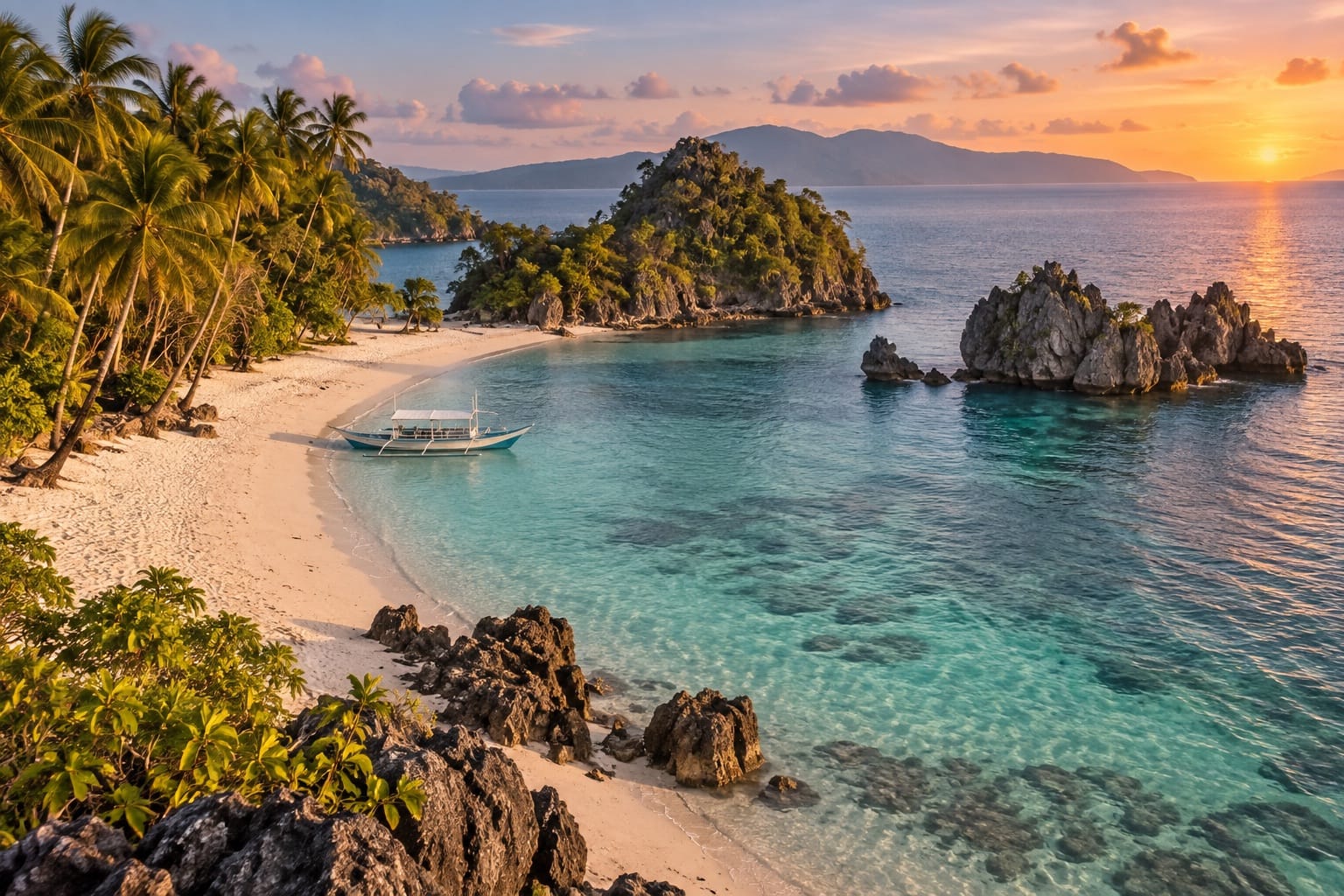
Maniwaya, off the northeastern coast in Santa Cruz, is the island's beach day: a long white-sand shore, clear shallow water, and the Palad Sandbar, a strip of sand that surfaces at low tide. Boats reach it from the Santa Cruz-side coast, and nearby islets and rock formations are often folded into the same trip.
Tres Reyes Islands
Off Gasan, the Tres Reyes Islands take their name from the Three Kings: Gaspar, Melchor, and Baltazar. Gaspar is the largest and the most visited, with a wide beach for camping, and the surrounding water is a dive and snorkeling area where assessments have mapped sunken merchant wrecks. It is a short outrigger trip from the Gasan waterfront.
Mount Malindig and Malbog Sulfur Spring
Mount Malindig anchors the island's south, and at its edge in Buenavista is the Malbog Sulfur Spring, a long-standing local picnic spot whose sulfurous water is traditionally believed to help skin complaints. In the 1900s a Marinduque pharmacist bottled the spring water and sold it in Manila as medicine for stomach problems.
Getting there
Ferries connect Lucena City in Quezon province with the Marinduque ports at Mogpog and Santa Cruz, a crossing of a few hours with boats through the day. Balanacan Port in Mogpog is the usual arrival point, and the roads run from there to Boac and the rest of the island, while travelers bound for Maniwaya use the Santa Cruz side. Confirm current schedules and operators before you travel.
When to go
Marinduque is busiest at Holy Week, when the Moriones fills Boac, Mogpog, and Gasan; book rooms and transport well ahead for that week. Outside it the island is quiet and unhurried. The drier months from December to May are the easiest for island hopping and the coastal road, while the wet season brings rougher crossings and frequent rain, so leave room in the plan.
More in Luzon
Metro Manila
Metro Manila
The capital's walled history, museums, and food, wrapped inside a dense and energetic metropolis.
Puerto Galera
MIMAROPA
A bay of coral, calm coves, and busy beach bars on Mindoro, an easy island escape from Manila.
Puerto Princesa
MIMAROPA
Palawan's capital and gateway, home to the Underground River and a base for island-hopping and onward travel.