

Luzon · Cordillera Administrative Region
Abra (Kaparkan)
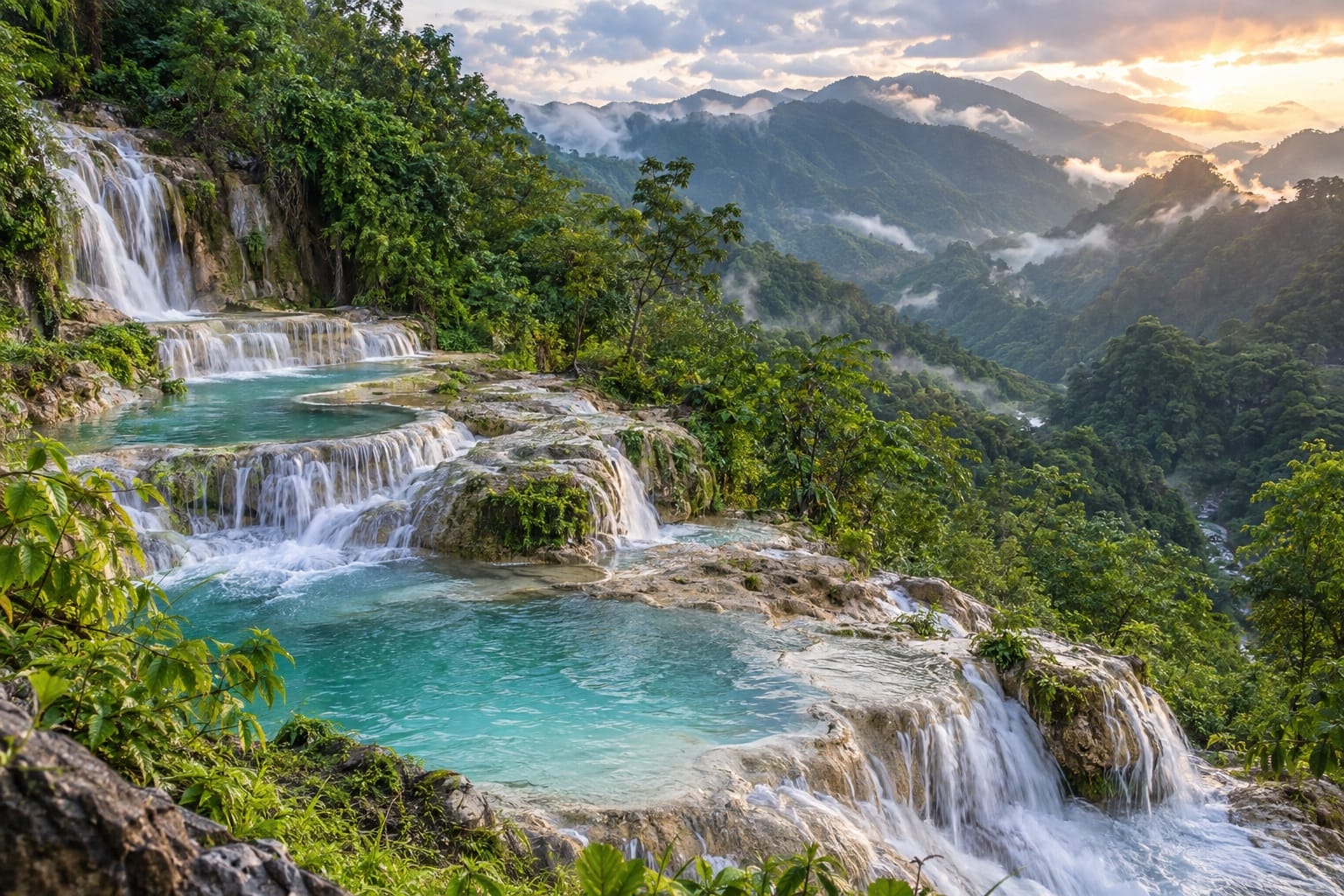
A remote Cordillera province of terraced turquoise cascades, sculpted rock, and highland grassland, reached on guided expeditions.

Overview
Abra is one of the least-visited provinces in the Cordillera, and its signature draw is Kaparkan Falls in Tineg: a staircase of limestone basins and turquoise pools on the Tineg River, fed by the rains and reached by a long rough-road ride and a short trek. Bangued, the provincial capital, makes the practical base, with the sculpted Piwek rock formations, the rolling grasslands of Apao, and heritage stops linked to the Ilocano revolutionary Gabriela Silang within reach. Access is coordinated through the provincial tourism office, so this is a trip to arrange rather than improvise.
Standout experiences
Kaparkan Falls
Terraced limestone basins dropping into a taller fall on the Tineg River, visited with accredited transport and a guide after the rains.
Piwek Rock Formations
A sculpted rock citadel in the uplands, usually reached on a separate four-wheel-drive day from Bangued.
Apao Rolling Hills
Wave-like highland grasslands that turn greenest in the wet season, often combined with the road toward Tineg.
Bangued town loop
The capital's bridge, tunnel, galleries, and hilltop viewpoint make an easy half-day around the trailheads.
Getting there
Abra has no commercial airport. Travelers reach the capital, Bangued, by direct air-conditioned bus from Metro Manila, a trip of about eight to ten hours, or by bus or van through Vigan and Laoag. Laoag International Airport (LAO) is the nearest airport with scheduled flights. From Bangued, a hired van, jeepney, or tricycle covers the mountain road to Tineg, the jump-off for Kaparkan Falls.
When to go
Kaparkan Falls is seasonal. The Tineg local government opens the terraces in the rainy season, roughly July through September, when monsoon water fills the limestone pools, and closes them as the flow drops; outside that window most pools dry up. The rest of Abra is best in the dry months from December to May, which also suit the March Kawayan Festival in Bangued and highland trekking.
More in Luzon
Alaminos / Hundred Islands
Ilocos Region
The country's first national park, a scatter of green limestone islets off Pangasinan for island-hopping, swimming, and viewpoints.
Baguio
Cordillera Administrative Region
A cool highland city of pine forest, markets, parks, and a strong creative and food scene.
Baler
Central Luzon
The birthplace of Philippine surfing, a Pacific coast town of steady waves, a falls trek, and colonial history.