

Luzon · Cordillera Administrative Region
Baguio
A cool highland city of pine forest, markets, parks, and a strong creative and food scene.

Overview
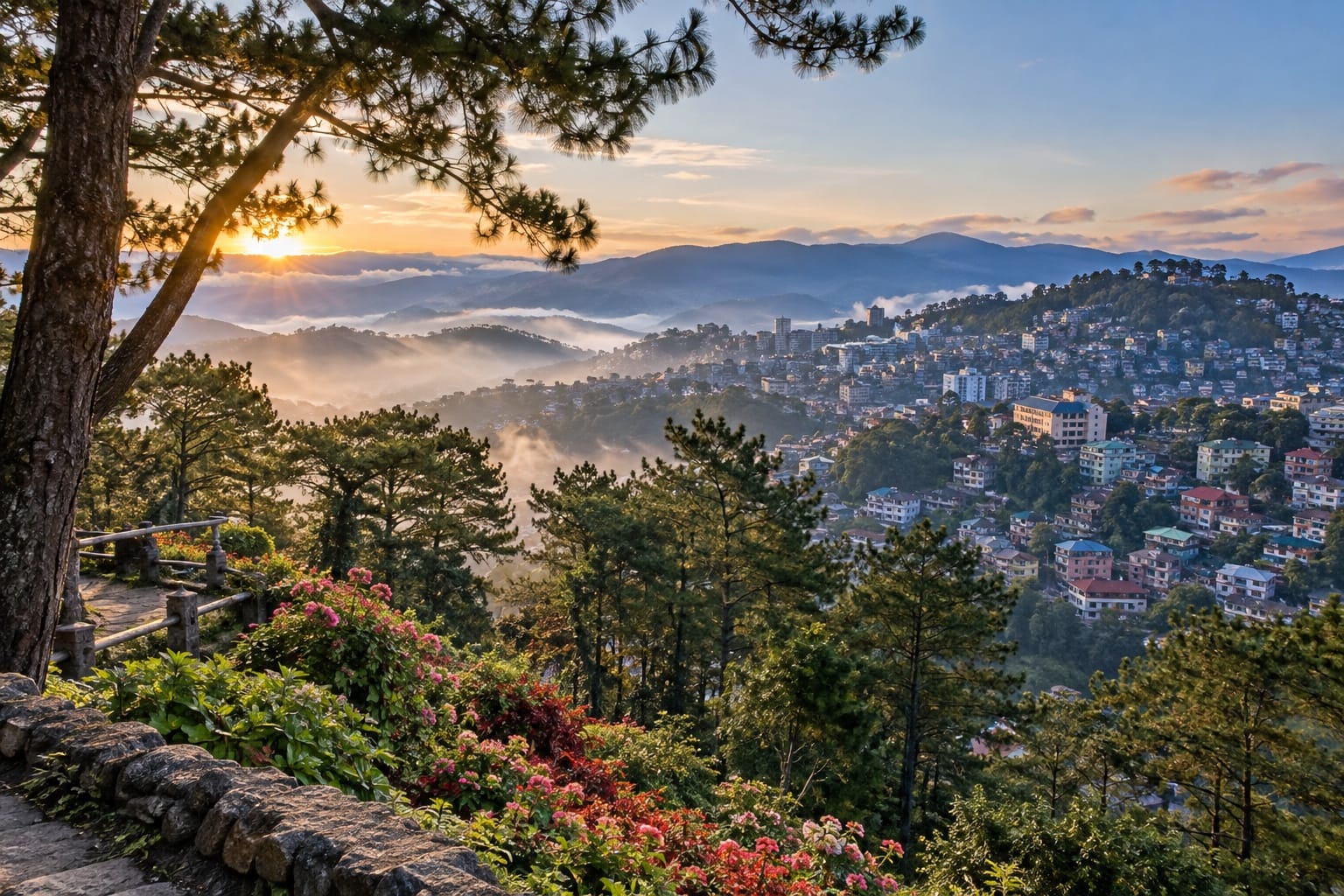
Baguio sits high in the Cordillera, and its altitude shapes the whole visit: cool mornings, pine-covered hills, and a pace that feels slower than the lowlands. The city grew out of a planned American-era hill station, so parks, viewpoints, and market streets sit close together in a compact center. It is the classic weekend escape from Manila, equally suited to eating along Session Road, browsing crafts and produce, or using the city as a base for Benguet day trips.
Standout experiences
Burnham Park and Session Road
The city's central green and its main commercial street, an easy half-day loop of boats, bikes, and cafes.
Baguio food and craft markets
Secondhand stalls, public-market produce, and a cafe culture built around local strawberries, longganisa, and Cordilleran vegetables.
Mines View Park and Wright Park
Long-standing viewpoints over the old mining hills, usually paired with the nearby parks and pine-lined promenades.
Camp John Hay
A former recreation base turned forested retreat, with trails, gardens, and a small history museum.
Day trips into Benguet
Strawberry farms in La Trinidad, flower fields in Atok, and, for prepared hikers, the grasslands of Mount Pulag.
Getting there
Loakan Airport (BAG) is Baguio's own airport, but it has no scheduled commercial passenger flights; Philippine Airlines ended its Baguio to Cebu service in July 2024. Travelers reach the city by frequent buses from Manila, a five- to six-hour drive, or by bus from Clark (CRK) and other northern Luzon towns. The city is also reached by car up Kennon Road or Marcos Highway.
When to go
Baguio sits at about 1,500 meters and averages 18.3 degrees Celsius, the coolest city in the country. The coolest and driest months run December to February, while the wettest months are June to October. Strawberry picking in nearby La Trinidad is best from October to May, and the Adivay Festival falls on November 23.
More in Luzon
Baler
Central Luzon
The birthplace of Philippine surfing, a Pacific coast town of steady waves, a falls trek, and colonial history.
Banaue
Cordillera Administrative Region
The gateway to the Ifugao rice terraces, a World Heritage landscape of hand-carved amphitheatres and mountain villages.
Bataan (Morong)
Central Luzon
A peninsula of World War II memory, heritage towns, and quiet beaches within easy reach of Manila.