

Luzon · Central Luzon
Clark / Angeles / Pampanga
A former air base turned gateway of aviation history, wide avenues, hotels, and Kapampangan food.

Overview
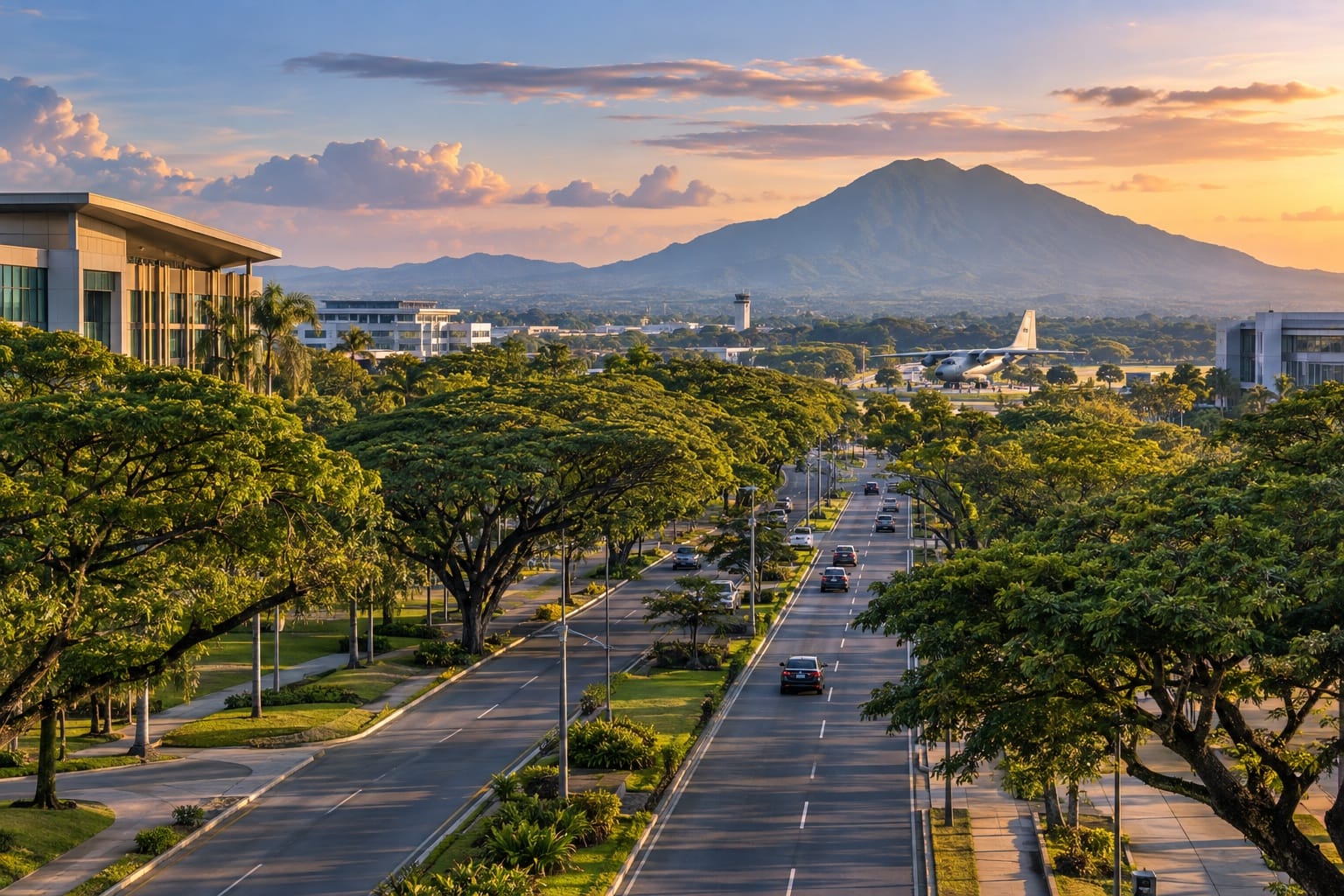
Clark began as a United States air base and is now a planned freeport of broad avenues, museums, and conference hotels, with its own international airport beside it. The base history stays close to the surface in the air museum and memorial sites, and the location in Pampanga puts one of the country's best food cultures within easy reach. For many travelers Clark is a first or last stop on a Philippine trip rather than a destination in itself, but it rewards a day or two of museums and eating.
Standout experiences
Clark Museum and air history
Exhibits on the base and the surrounding region, from the American colonial period to the eruption of Mount Pinatubo.
Kapampangan food
Sisig and a long cooking tradition that makes neighboring Pampanga a destination for food travelers.
Angeles heritage
Churches, markets, and streets that carry the area's layered colonial and wartime past.
Mount Pinatubo day trips
A four-wheel-drive-and-trek route to the crater lake, arranged as a guided day trip from Clark or Angeles.
Bulacan and Nueva Ecija add-ons
Heritage churches, caves, and river gorges within reach for travelers with a car or a guide.
Getting there
Clark International Airport (CRK) is the gateway, with domestic and international flights, and it sits inside the Clark Freeport Zone. Angeles City and the rest of Pampanga are reached by road on the North Luzon Expressway and the Subic-Clark-Tarlac Expressway, and buses and taxis link the airport to nearby cities.
When to go
Pampanga is hot and dry from December to May and wet from June to November. The dry months suit food tours, Mount Arayat hikes, and the freeport. The Christmas season brings the Giant Lantern Festival and the parol-making communities of San Fernando, the province's self-declared Christmas Capital.
More in Luzon
Coron
MIMAROPA
Limestone-walled lakes, wreck dives, and an easygoing island-hopping town on northern Palawan.
Donsol
Bicol Region
A quiet Sorsogon fishing town known for ethical whale-shark encounters and mangrove firefly evenings.
El Nido
MIMAROPA
Bacuit Bay lagoons, karst islets, and long beaches on Palawan's most photographed coastline.